The inimitable Manuel María Puga y Parga, “Picadillo”, wrote in 1901 that salt cod was one of the “most funereal fish taken from the seas, which is why it has become absolute monarch in times of abstinence and sacrifice”. Those were different times, when fresh fish was a luxury. Until the last quarter of the 20th century, salt cod was one of the few seafoods most families could afford, and it was eaten more for religious reasons than for pleasure.
Perhaps that is why the gourmets of the time did not rate it. In 1929 Julio Camba called salt cod “fish-shaped mummies” and joked that, rather than from the North Sea, they must have been “taken from the pharaohs’ tombs together with mojama (cured tuna), peanuts, toasted chickpeas and other fossil foods”.
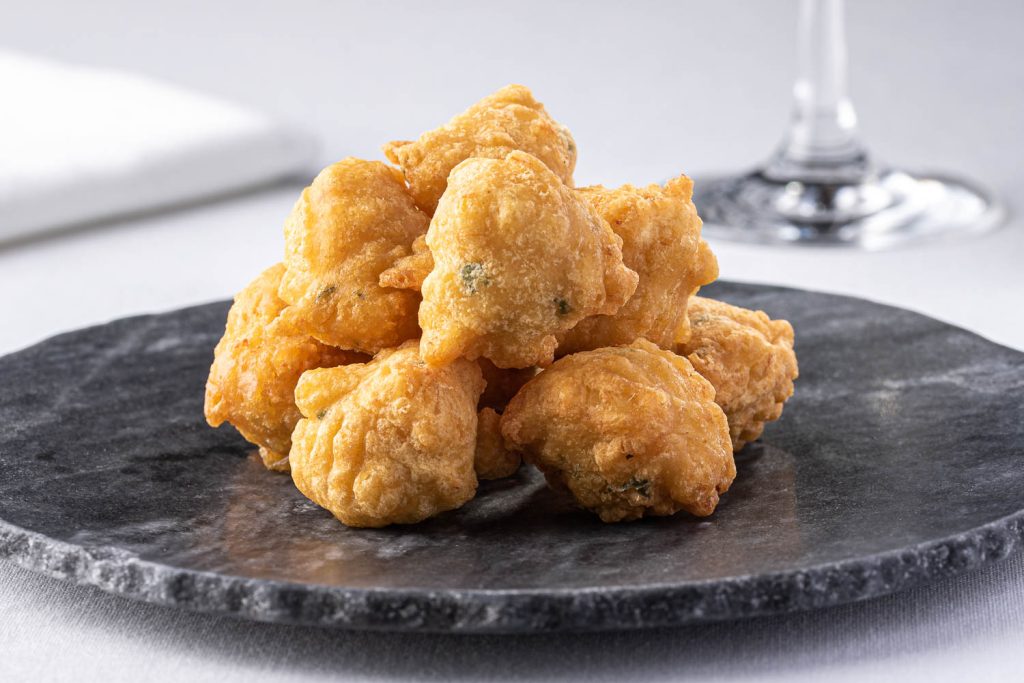
Be that as it may, we love salt cod, and now we can enjoy it all year round, not just during Lent. So today we want to share our recipe for boladillos de bacalao, salt cod fritters, a very Almería dish that appears from time to time on the menu at Restaurante Juan Moreno.
Ingredients for salt cod fritters (serves 4-6)
- 400 g flour
- 400 g salt cod
- 1 tablespoon baking powder
- 2 eggs
- 2 glasses of sparkling water
- 2 garlic cloves
- Extra virgin olive oil for frying
- 1 tablespoon chopped parsley
- 1 tablespoon salt
Method
Soak the salt cod in cold water for at least 24 hours to remove the excess salt, changing the water several times. Then flake the flesh, discarding the bones. Crush the garlic with a little parsley in a mortar. Put all the ingredients in a large bowl and mix well. You want a batter thick enough to fry in small portions.
Heat the oil to about 170 °C and test it with a little batter. If the batter sinks, the oil needs to be hotter so the fritter floats. But don’t overdo it: if the oil is too hot the fritter will brown quickly on the outside and stay raw inside. Once the temperature is right, drop portions of batter into the oil, shaping them with two spoons. Fry until lightly golden. Work in small batches so the oil doesn’t cool down. Serve straight away so they keep their texture and heat, although they are also good cold.
Sources:
- La Casa de Lúculo (1929), Julio Camba
- 36 maneras de guisar el bacalao (1901), Manuel María Puga y Parga